

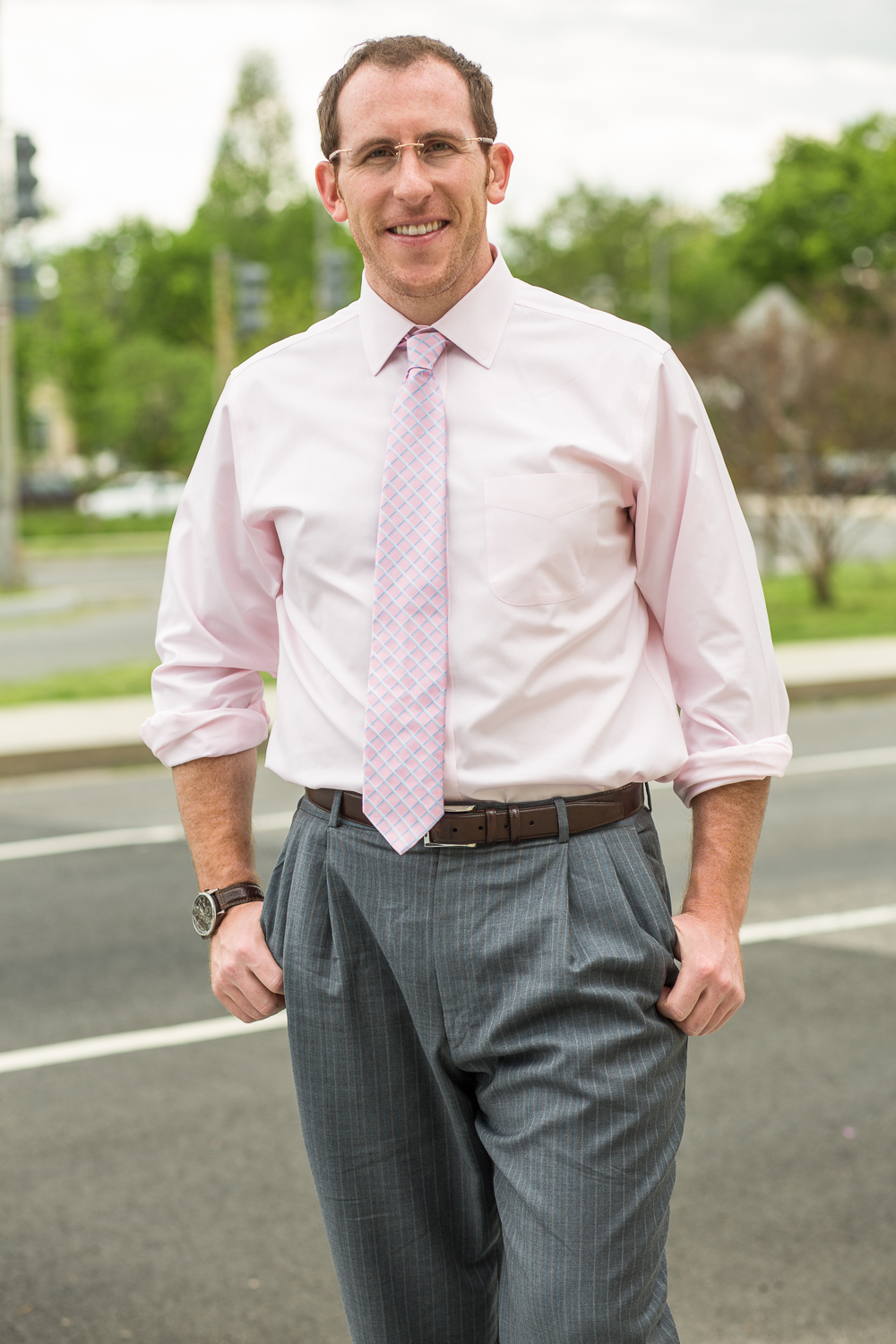
The Builder Harvard Was Designed For
From a Pennsylvania farm to landmark restorations, major medical campuses, and the front edge of AI-era development, Sean Flynn built a career at the intersection of engineering, capital, and execution. His Harvard milestone feels less like a pivot than a fitting next chapter.
LEADERSHIP PROFILE | SEAN R. FLYNN, PE
On some projects, Sean Flynn, PE likes to say, the cost of delivery can reach $200,000 a minute. In most careers, that would sound like rhetorical flourish. In his, it is operating reality. Airports under renovation cannot stop running. Hyperscale campuses do not wait for indecision. Manufacturing programs, medical assets, and owner-led developments all move with the kind of momentum that turns every meeting, sequence, and contract term into a meaningful business decision.
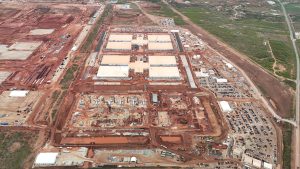
Flynn now works inside that high-pressure world every day. His experience spans live-airport renovations, advanced manufacturing, major healthcare programs, mixed-use development, mission-critical infrastructure, hospitality, residential, and civic work. He has provided oversight across more than $100 billion in project value, including the largest programs in United States history connected to the Stargate AI campus in Abilene, Texas, Rivian’s major manufacturing campus, and work within the third busiest United States transportation hub with the Denver International Airport.
Yet scale is only the surface-level story. The more revealing fact is that Flynn still thinks like a builder in the oldest sense of the word. He knows that even the largest programs are won or lost through details: one decision, one sequence, one relationship, one risk allocation at a time. That instinct did not come from conference rooms. It was formed much earlier, on a 400-acre family farm in northeastern Pennsylvania.
His family had worked that land since 1906. When dairy economics began to deteriorate, Flynn did not respond with sentimentality. He responded with resourcefulness. At 12, he and his family began working through old stone walls on the property, uncovering bluestone that had been found generations earlier by immigrant hands. Where others saw debris, Flynn saw inventory, value, and the basis for a business. That discovery became Flynn Stone, the company he founded with his father at 12 and still operates today.
The origin story matters because it explains the through-line of his career. Again and again, Flynn has shown a talent for identifying assets other people undervalue—land, buildings, partnerships, or strategic positions inside large programs—and turning them into something enduring. It is the same pattern whether the context is a family business, a medical campus, a waterfront redevelopment, or the infrastructure surrounding the AI economy.
That pattern continued in school. At Penn State, Flynn earned both a bachelor’s and a master’s degree in Architectural Engineering, specializing in Construction Management, and graduated as a Schreyer Honors Scholar. He finished first in his department and built a record distinguished by academic honors and leadership recognition. Later, he added an MBA from Johns Hopkins, strengthening the finance and investment side of a foundation already grounded in engineering and execution.
Meanwhile, Flynn Stone became far more than a local operation. Under Flynn’s leadership, it grew into a nationally recognized and internationally awarded design and fabrication enterprise. Its work reached Arlington National Cemetery, the U.S. Capitol, the World War I Memorial, and prominent installations in Philadelphia, Singapore, and Japan. There was custom work for former President George W. Bush. There were design honors at home and abroad. But the prestige tells only part of the story. What Flynn was really building there was an owner’s mindset: procurement, production, labor management, logistics, design quality, client service, and the hard economics of making something excellent with limited resources.
That mentality scaled with him when he moved into major corporate construction at Balfour Beatty.
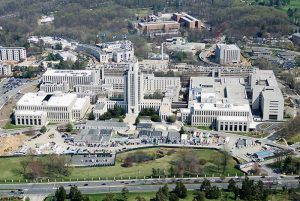
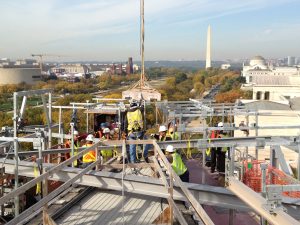
There, he helped lead work on the Walter Reed National Military Medical Center—one of the country’s largest design-build medical programs at the time—as well as the National Gallery of Art East Building restoration and early LEED Platinum office projects in Washington. Walter Reed was the kind of proving ground few professionals ever get: complex stakeholders, unforgiving schedules, high consequence, and zero tolerance for disorder. At the National Gallery, he worked on the restoration of roughly 17,000 marble panels on I.M. Pei’s historic East Building, a project requiring both technical rigor and respect for architectural legacy.
Those assignments sharpened something that still defines Flynn’s career: the ability to remain calm inside complexity. They also deepened his understanding that excellence is not a matter of slogans or branding. It is a systems discipline. It lives in governance, coordination, procurement strategy, sequencing, documentation, accountability, and trust.
The next evolution came when Flynn moved further toward redevelopment, principal-side thinking, and investment. At National Resources in New York, he helped reposition former industrial and corporate properties into new waterfront, mixed-use, and technology-oriented communities. Projects such as iPark 84, iPark Yonkers, Hudson Harbor, and Edgewater Harbor were not simply construction assignments. They were exercises in reinvention: taking assets whose first life had ended and giving them a second one grounded in new market realities.
That transition matters because it marked the point where Flynn’s work became about more than delivery. It became about thesis. Why this site? Why this market? Why this risk profile? Why this capital structure? Why now? Through Revolution Developments, Flynn Investments, and affiliated ventures, he helped build and lead more than 25 equity and operating partnerships, secure more than $250 million in invested capital, and oversee more than 2 million square feet of activity across healthcare, mixed-use, hospitality, residential, and specialty development.
“It is a rare arc: from fabrication yard to capital stack without ever losing touch with how things actually get built.”
That is a rare arc: from fabrication yard to capital stack without ever losing touch with how things actually get built. It is also one reason Flynn’s current work feels especially aligned with the moment. As artificial intelligence begins to reshape power demand, logistics networks, land planning, workforce housing, and regional development, the people best positioned to lead are not merely technologists or financiers. They are operators who can see entire systems at once.
Flynn is one of those operators. His current work sits at the center of a new American buildout: hyperscale data centers, EV manufacturing, live public infrastructure, and the support ecosystems that rise around them. He has described leading development processes for what is essentially a digital city—a place where delivery can move at $200,000 per minute and where a single decision can swing hundreds of millions of dollars against a pro forma.
What makes him particularly suited to that frontier is that he does not isolate the headline asset from everything around it. A data center, in Flynn’s view, is never just a data center. It is roads, power, water, labor, lodging, fuel, food service, governance, utilities, and community impact. It creates secondary demand for housing, hospitality, quick-service retail, trucking infrastructure, and local services. In other words, the opportunity is rarely the building alone. It is the ecosystem.
That way of thinking has become increasingly valuable as major industrial and technology investments spread into new geographies. Communities are not just receiving facilities; they are receiving new economic maps. The leaders who understand how to connect the flagship asset to the surrounding real estate and service infrastructure will define the next decade of development. Flynn’s career has been preparing him for exactly that assignment.
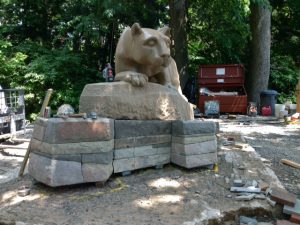
For all the scale of his work, however, Flynn’s story does not read as purely commercial. There is a consistent parallel record of service, mentorship, and institutional loyalty. He has served as a Johns Hopkins Leadership Board Fellow, contributed to Johns Hopkins real estate initiatives, and held board leadership with the Richardson Symphony Orchestra. Earlier in his career, he helped establish the Center of Sustainability at Penn State and supported restoration work at the Nittany Lion Shrine. He has stayed engaged in student outreach, career fairs, and mentoring, often distilling his advice into a line that sounds simple only because it has been lived: build a solid foundation of experience and a broad network, and a career can become a skyscraper of unlimited opportunity.
That is why Flynn’s Harvard chapter feels so well earned. Not because Harvard suddenly validates a life already shaped by discipline, endurance, and achievement. And not because another credential is needed to explain his range. It feels fitting because Harvard Graduate School of Design Executive Education’s Advanced Management Development Program in Real Estate sits precisely at the intersection where Flynn has spent his career working: design, development, finance, leadership, and the execution of ideas at scale.
After more than 25 years across engineering, construction, investment, and development, Flynn is entering a program built for professionals who already understand that real estate is never just about buildings. It is about markets, institutions, capital, communities, and the ability to translate vision into operating reality. He will bring to Harvard the perspective of someone who has worked in the quarry, the shop, the field, the partnership table, and the executive suite—and he will return with insights that can sharpen the next generation of large-scale real estate and infrastructure work.
In that sense, this is not a reinvention. It is recognition. Sean Flynn has spent a lifetime building at the intersection of material, money, and consequence. A place at Harvard is simply the next logical chapter in a career already defined by the qualities ambitious institutions are meant to reward: vision, rigor, leadership, and the ability to make big things real.
Congratulations to Sean Flynn on being selected for Harvard Graduate School of Design Executive Education’s Advanced Management Development Program in Real Estate.
Good Stuff!!!!