

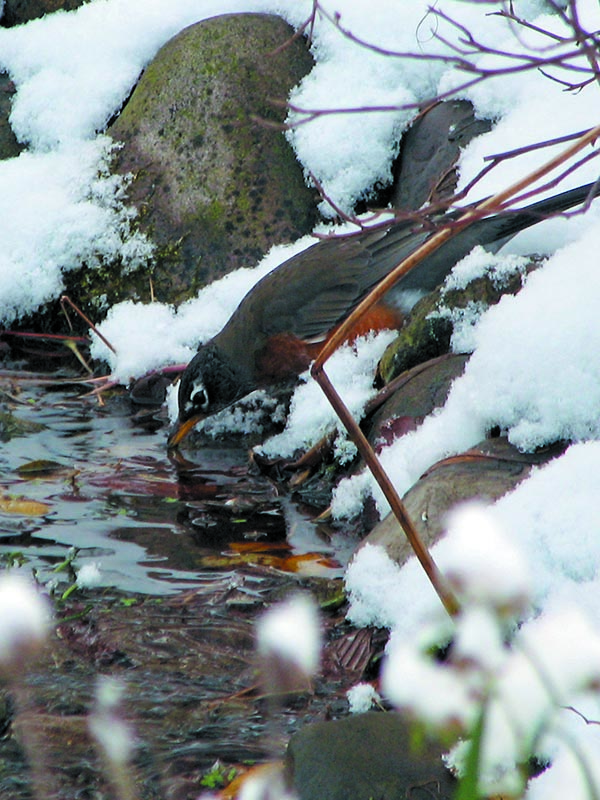
When most people think of winter in Northeastern Pennsylvania, they picture quiet forests, frozen mornings, and still, sleepy landscapes. But if you spend a little time near one of our many streams, lakes, or wetlands, you will find that winter is one of the most alive seasons of all, especially for birds.
I only started birding recently, but it has quickly become one of my favorite ways to get outside. This past summer, I spent countless hours along the Delaware River and throughout the Delaware Water Gap National Recreation Area learning to spot kingfishers, the many (many) warblers, great blue herons, and bald eagles. I am still getting used to slowing down, listening for small clues, and noticing the flashes of movement around me. It has become a grounding part of my everyday life, and I love seeing more people my age discovering it too! Since the pandemic, a lot of younger people have turned to the outdoors for peace and purpose. Many of us are feeling the weight of climate anxiety, and birding offers a simple way to reconnect with nature and remind ourselves why protecting it matters.
Winter birding, especially near water, makes that connection impossible to ignore. Streams are lifelines for birds in cold weather. When lakes and ponds freeze, flowing water often stays open, giving birds a critical source of liquid water for drinking and bathing. Riparian areas also shelter insects and other small creatures that become an important food source when resources are scarce. Healthy, free-flowing streams support bird diversity in a way that feeders never could. Protecting them through smart salt use, strong riparian buffers, and clean water practices helps ensure that overwintering birds have what they need to survive.
One of the best parts of birding is how accessible it is. Free tools like Merlin Bird ID, eBird, and iNaturalist can help you identify what you see and contribute to real community science. All you need is a warm jacket, your phone, and a little curiosity. Even a quiet walk along a creek can reveal how much life is still moving through Pike County in the cold season.
Madelyn Garcia (mgarcia@pikepa.org) is the Watershed Specialist at Pike County Conservation District, a local resource that provides education and technical assistance on the importance of our community’s natural resources.